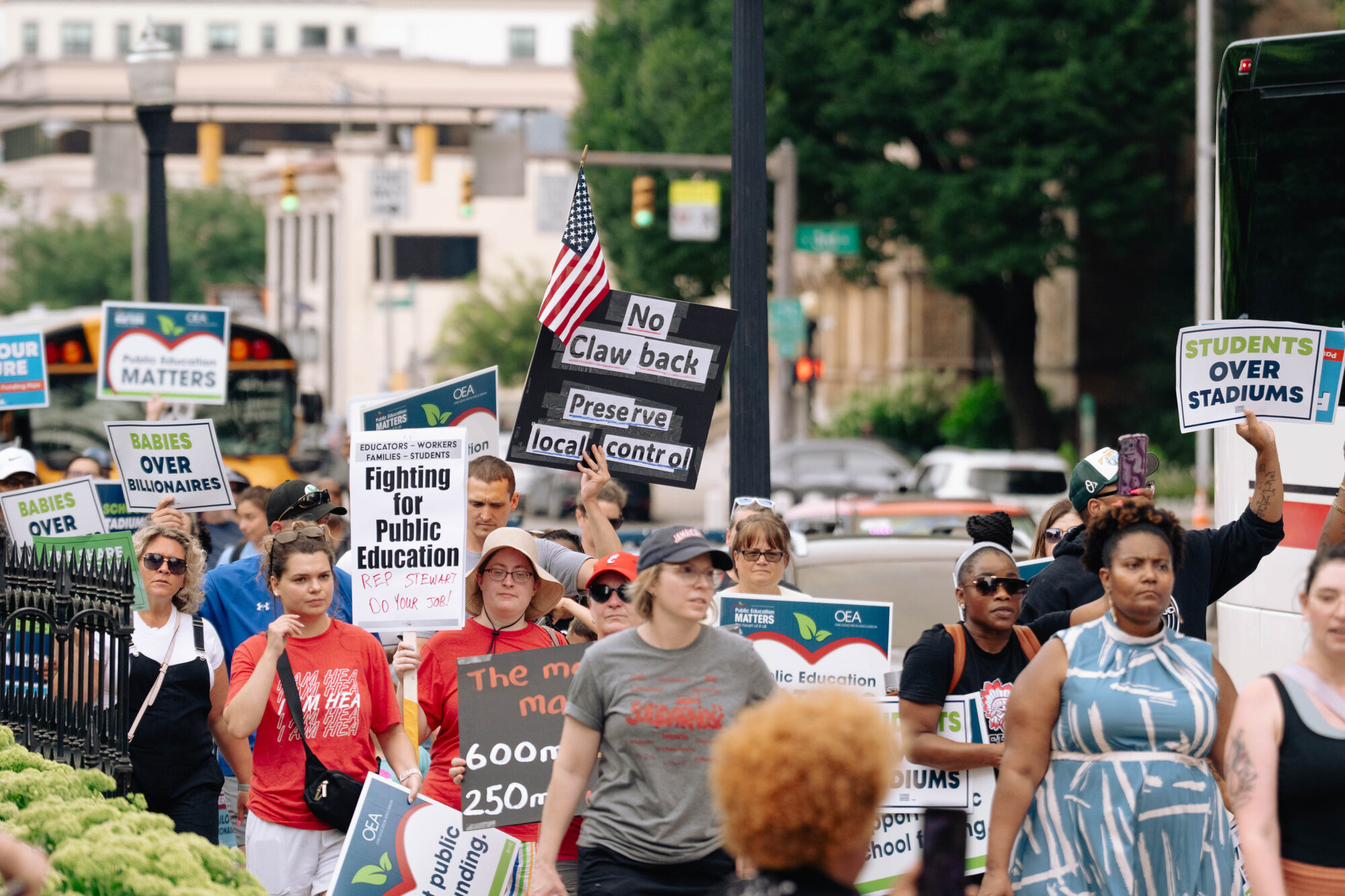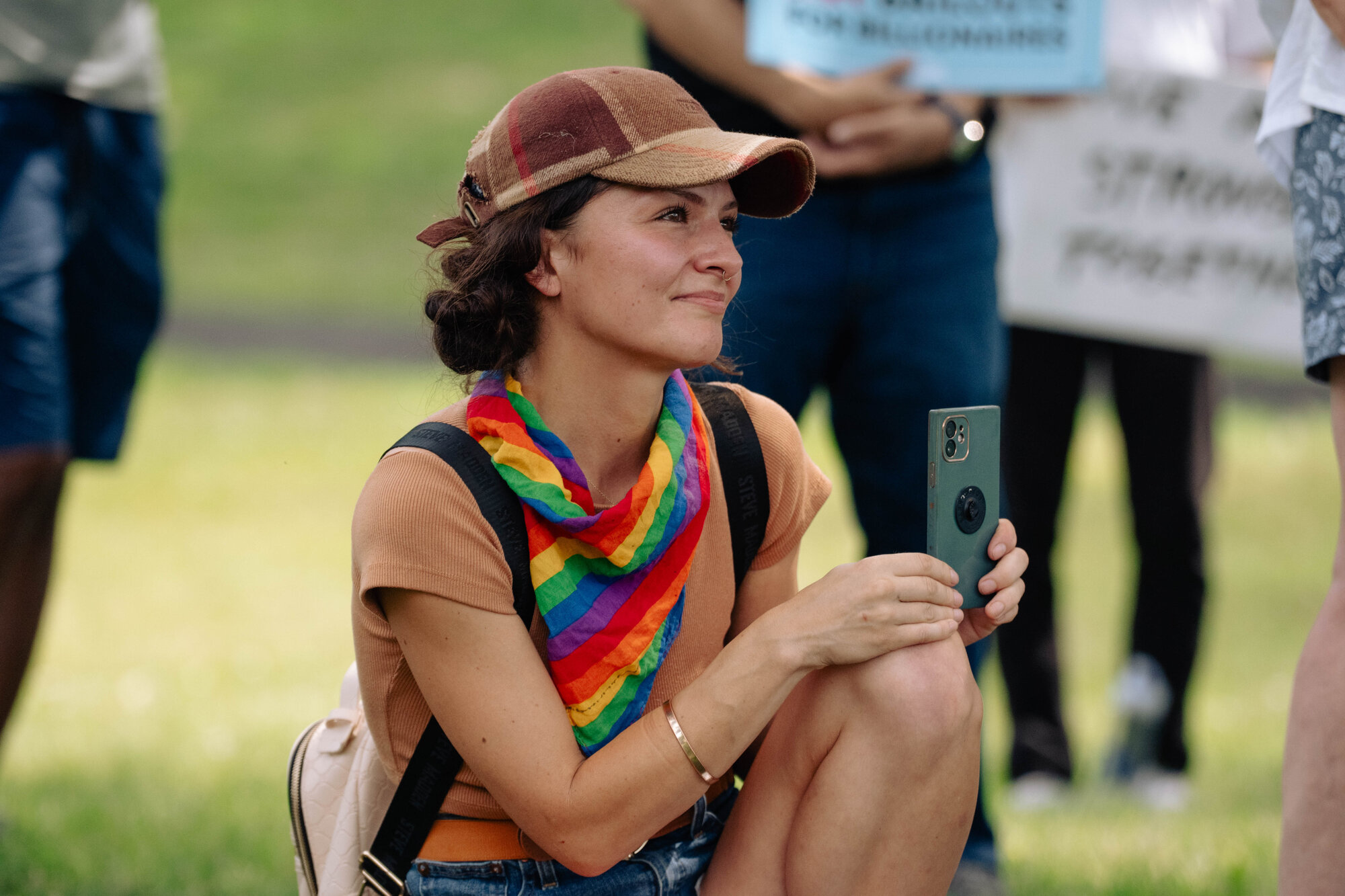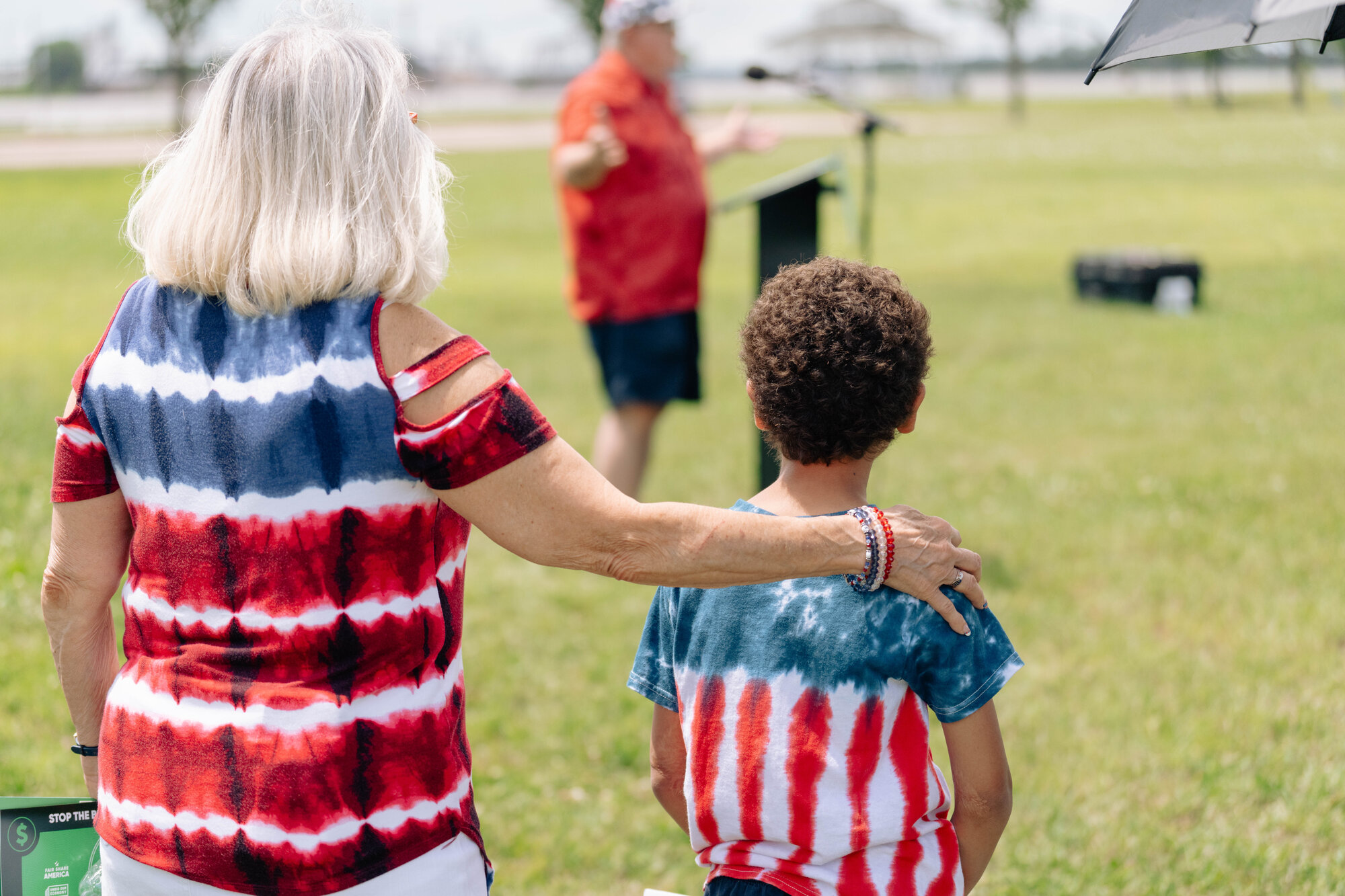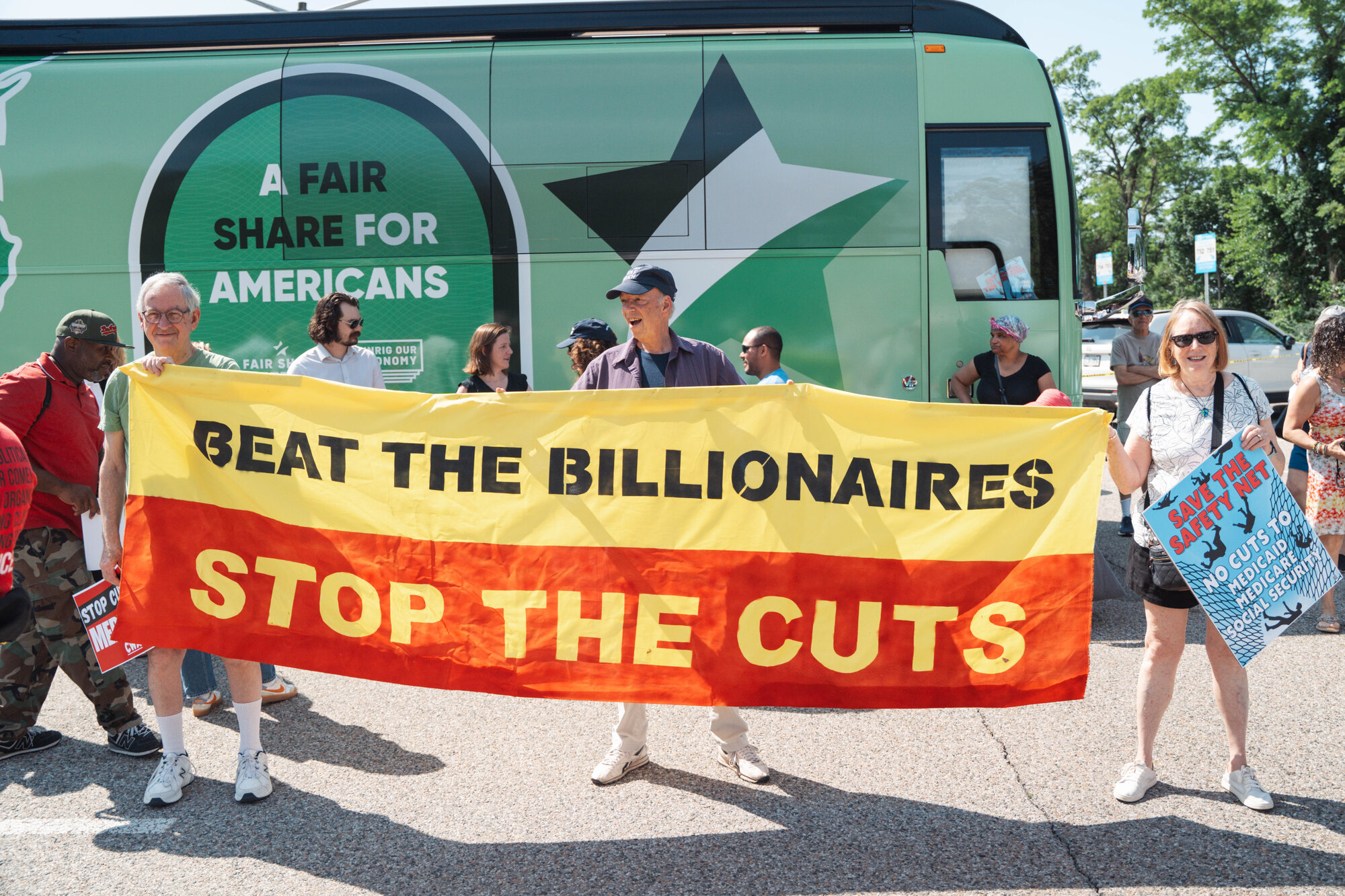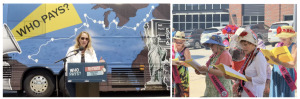
OMAHA, Neb. (July 12, 2026) – One year after President Trump signed the One Big Beautiful Bill Act into law, Omaha area residents, parents, public servants, and elected leaders gathered Sunday to hold a Community BBQ for Food Security and describe the real-life consequences of the law that took from working families to pay for $4.5 trillion in tax cuts for billionaires and large corporations.
Families Over Billionaires, together with Nebraska For Us, Food Bank for the Heartland, and IBEW 22 brought its nationwide Who Pays? Bus Tour to Omaha, where speakers warned that cuts to Medicaid and SNAP, higher health care costs, and growing pressure on Nebraska’s budget are already hurting families and local communities.
- 25,000 Nebraskans are expected to lose Medicaid coverage due to work requirements alone.
- Nearly 17,000 people in Nebraska have already lost SNAP benefits.
- The expiration of enhanced ACA premium tax credits has increased insurance premiums for thousands of Nebraskan families.
- Nebraska’s taxpayers are now shouldering billions in additional costs shifted from the federal government.
Last summer, residents repeatedly urged Rep. Don Bacon to oppose the bill before its passage. Sunday’s event brought the community together to assess the law’s impact at the one year mark — and make it clear to all elected officials that they will be held accountable for putting billionaires over families.
Following the remarks, Nebraska for Us presented the Food Bank for the Heartland with a $10,000 donation check to help them continue their work feeding families and making up for where government leaders have failed.
EXERPTS
Kristen Crowell, Executive Director of Families Over Billionaires
- “We made the phone calls, we wrote the op-eds, we knocked doors, we called our Representatives, and we demanded that Congress stand with working people in our communities and tell the billionaires no more handouts. We know what happened. They lacked the courage politically. They lacked the courage morally. And they threw us all under the bus. One year later, we are all living with the consequences.
- “We’re here to stand in solidarity with the nearly 18,000 members of Nebraska, predominantly children, veterans, and seniors, who have their food assistance at risk and are already losing it as we speak. We stand in solidarity with the 78,000 Nebraskans who stand to lose health care coverage. We know that those losses of food and health care are enormously detrimental to a community.”
State Senator Victor Rountree (LD3)
- “Food security is one of our basic things. If you’re not able to have good food, you’re not going to be able to learn. And learning is one of the foundations of our community – of all good, safe communities.
- “These SNAP cuts affect our veterans, those who have served us in our military. We promised that we would take care of them when they came over, and then we excluded them. That is not how the United States should take care of its business.
- “We will fight to ensure that our people are fed, that they have the right to medical access because when they have good, strong families, good, strong schools, good, strong communities, that makes a good, strong state. AAs we say: Nebraska, a good life. If it’s really going to be a good life, then all Nebraskans should have an opportunity to participate in that.”
Dr. Alex Dworak, primary care physician with the Committee to Protect Health Care
- “The fact that children are hungry and that people have preventable deaths is not an unfortunate circumstance. It is a deliberate policy choice…. Policy choices will dictate whether more families learn firsthand what it’s like to watch a loved one in anguish literally die in the corner, and policy choices will determine whether there is a clinic, a doctor, an ambulance, and a hospital posted to intervene or not. … We can absolutely ensure that no child in this country goes to bed hungry tonight, and that nobody ever has to skip their doctor’s visit, ration their insulin, or go bankrupt and burn through their retirement savings to pay for a loved one’s cancer treatments.
- “As a physician, I am already writing letters detailing chronically ill patients with extensive medical histories in hopes that their insurance isn’t taken away. They are scared because they know exactly how bad it would be for their health if they lose their insurance. Frankly, I am too.
- “Preventive care is one of the smartest investments we can make. Helping someone control their diabetes, treat their blood pressure, keep up their vaccines, and get prenatal care isn’t just better for patients and less expensive than waiting until problems become emergencies. For me, it’s a moral imperative. I believe anyone who is elected as a civil servant but objectively doesn’t care about the lives and well-being of their constituents is morally bankrupt.”
Joan Jakoubek, US Navy veteran and SNAP recipient
- “My family, on and off, have relied on SNAP specifically and Medicaid for sure. I never thought there’d be a day my kids would lose Medicaid…. It’s like this vicious cycle when you start having those things ripped out from under you, it’s hard to breathe…. Security has been stripped from me and my family.
- “Most people know that Nebraskans are really friendly people that don’t leave people behind. And honestly, I just feel betrayed by a state that my ancestors came here as homesteaders and risked their lives and stayed.
- “When you think about it, dollar for dollar, every single dollar spent on SNAP goes back into our economy, to our farmers, to our grocery stores, and so it is another way to stand forward.”
Angie Lauritsen, Executive Director, Nebraska For Us
- “When you take away food access, when you take away dollars to purchase food, families still have to eat. They still have to eat. They still need to feed their children. They need to take care of themselves. And so, if they don’t have the food, the money to purchase the food, they’re going to take that money from something else. Are they not going to pay rent? Are they not going to get their car repaired? Are they having second thoughts about making that doctor appointment to go get seen for something that they know they should be seen for? All because they need food. Families today are making those choices.
- “I know what it’s like to be hungry, so this is personal to me. When you start taking food away from people, this is personal. There’s so many things within our community that happen because of hunger. If you don’t like crime, fix hunger. If you don’t like so many other things within our communities, solve hunger first. Do that first. When the federal government, when our federal delegation votes to take away food, when they vote to take away services that help the most in need within our communities.
Tim Williams, Director of Government Affairs and Advocacy for Food Bank for the Heartland
- “Right now, roughly one in seven individuals across our service area and one in five children are considered food insecure. That number is not expected to go down anytime soon, which is why we’re really concerned with the cuts to SNAP and Medicaid. HR1 will only further exacerbate an already overburdened and overworked emergency food system, and our pantries are already seeing high levels of need across the service area.
- “A gift like this will really help elevate our work as we really strategically focus on providing our network partners with high-value, high-in-demand products like your dairies, your proteins, your produce, your nutrient-dense foods that are really cost-prohibitive for a lot of folks right now. …
Omaha was the 14th stop on the 17-city Who Pays? Bus Tour, which began June 30th in Portland, Maine, and concludes July 16th in Tucson, Arizona. At each stop, local residents share how policies that favor billionaires and large corporations are affecting their communities.
Who Pays? bus tour national partners include: GenZ For Change, Protect Our Care, Committee to Protect Health Care, National Women’s Law Center, Institute on Taxation and Economic Policy, DemCast USA, National Nurses United, Oxfam, Unrig Our Economy, Americans for Tax Fairness and State Revenue Alliance.
Also see the latest op-ed from Kristen Crowell on Heartland Signal: “OP-ED: Billionaires got a break. The rest of us got the bill.”