Grassroots leader says to meet the midterm mandate, lawmakers must make billionaires and corporations pay their fair share in taxes
Chicago, IL (November 4, 2026). Today, Families Over Billionaires released this memo, on the outlook for raising taxes on billionaires and corporations in the wake of the blue tsunami midterm elections.
“Lower health care costs, affordable child care and better pay all take revenue,” said Kristen Crowell, Executive Director of Families Over Billionaires. “The money is there at the top, and voters have given Democrats the mandate to go get it.”
TO: Interested Parties
FROM: Kristen Crowell, Executive Director, Families Over Billionaires
DATE: November 4, 2026
RE: To Meet the Midterm Mandate, Make Billionaires & Corporations Pay Their Fair Share
Yesterday, the American people voted for sweeping change. Democrats will take over Congress in January with a mandate to make life more affordable and fair for everyday Americans. So let’s get real about what that means: Lower costs, better pay and an economy that works for everyone won’t happen unless we make billionaires and corporations pay their fair share in taxes.
The midterm election results, like the public polls, show Americans want fair taxes. A few key indicators prove 2027 is the year to make it happen:
1. Voters named affordability and corruption as key drivers of their votes. Both run straight through the tax code.
Americans voted to bring down costs. The money to do that and to invest in health care, child care and clean energy, sits in the accounts of billionaires and corporations that have avoided paying their fair share for decades.
Corporate tax collections fell about 15% this fiscal year, down more than 25% since 2024, driven by Trump’s repeated tax cuts and subsidies. In 2025, 114 major corporations paid no current federal income taxes at all. Meanwhile, corporate profits hit a record $4.7 trillion. Billionaire wealth keeps climbing, and so does the amount the ultrarich avoid in taxes through loopholes and handouts.
People have had it with a rigged system that makes the rich richer and sticks everyone else with the bill. This election was a direct rebuke of the kind of “leadership” that guts Medicaid and SNAP to pay for massive tax cuts for billionaires and corporations. Affordability and accountability go hand in hand.
No real change can happen without raising revenue. Working people pay their fair share, so corporations and billionaires should too. That’s the only way we can responsibly invest to lower costs and improve opportunity for all, just as the voters demanded.
2. When asked directly on the ballot, voters repeatedly backed tax fairness measures in states.
This year’s income tax ballot measures broke our way when voters were asked directly about raising taxes on billionaires and corporations:
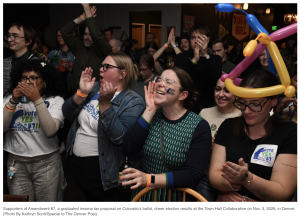
- In Colorado, voters approved Amendment 87, which replaces the state’s flat income tax with a graduated one. It makes the tax system fairer and raises revenue for essential public services by increasing taxes on the top 3% of earners.
- In Washington, voters defeated Initiative 645 and kept the millionaires tax the legislature passed in March. The law puts a 9.9% tax on income above $1 million starting in 2029.
- In Massachusetts, voters defeated Question 5, which would have changed the cap on how much tax revenue the state can collect each year. Revenue from the Commonwealth’s millionaires surtax has far exceeded projections, bringing in more than $3 billion in fiscal year 2026 alone. By rejecting Question 5, voters made clear they want that success to continue.
- In Missouri, voters defeated Amendment 5 in August, stopping an effort to phase out the state income tax.
3. Where ballot measures didn’t break toward raising revenue, the results come with big asterisks.
The biggest is in California, which delivered a split decision on raising taxes on the wealthiest.
Big Tech billionaires shattered state spending records to likely defeat Proposition 40, a one-time 5% tax on the state’s ultra-rich. In what Politico called “a striking and historic show of unity from a notoriously hard-to-organize donor class,” they spent more than $300 million and outspent supporters 250-1. So Prop 40’s defeat says far more about the power of billionaire money in politics than about voters’ appetite for taxing the rich and corporations.
On the same ballot, California voters approved Proposition 3, and made permanent an income tax on the wealthy that funds K-12 schools and other essential services. The surtax, which was originally passed in 2012, raises tax rates on the top 2% of wage earners.
Per our friends at Alliance Action Fund: “Anti-tax voices will try to skew the voters’ intent and results, particularly in California. Don’t take their “facts” at face value. Here are 6 reasons to question what they say about the election results.”
4. Voters also resoundingly rejected data centers and the sweetheart tax deals behind them.
Voters also turned out against the AI data center buildout. Of 41 data center measures on ballots in 10 states, voters sided against the industry in nearly every one counted so far, and at least 29 communities passed bans or restrictions, according to the Washington Post.
The backlash is about many things, including affordability and respect for community perspectives, but it’s also about who pays. States hand data centers billions in tax breaks: Georgia projects it will lose $2.5 billion this year to its data center sales tax exemption, and at least four states now lose more than $1 billion a year. In Perry, Ohio, more than 87% of voters approved requiring developers to put up financial guarantees before they get local tax breaks.
Amazon, Meta and other Big Tech giants are raking in record profits. They still collect 30-year local property tax deals, state sales tax exemptions and federal write-offs that Trump and Republicans in Congress supersized in the same bill that gutted Medicaid and SNAP. Communities pick up the bill through higher electric costs, strained power and water supplies, noise, pollution and very few permanent jobs. And the state tax breaks cost more than the revenue these projects bring in.
Working families understand that tax breaks for multi-billion-dollar tech companies are a ripoff. They were being asked to subsidize the richest companies in the world, while their cost of living is through the roof. It’s no surprise they said, “Hell No!”
To meet the voters’ midterm mandate, we must make billionaires & corporations pay their fair share.
Voters sent a clear message on Tuesday. They want lower costs and a government that works for them, not for the billionaires and corporations. When the ballot asked them directly, they chose to raise taxes on the rich and corporations to fully invest in things that help us all to thrive. When they voted the other way, it took record billionaire spending or amendments that never asked about taxing the rich to achieve that result.
That is broad support and a clear mandate to raise revenue by having the billionaires and corporations pay into making this country work for us all. It is also the only way Democrats will deliver the change they promised.
Lower health care costs, affordable child care and better pay all take revenue. The money is there, and voters have given Democrats the mandate to go get it.